

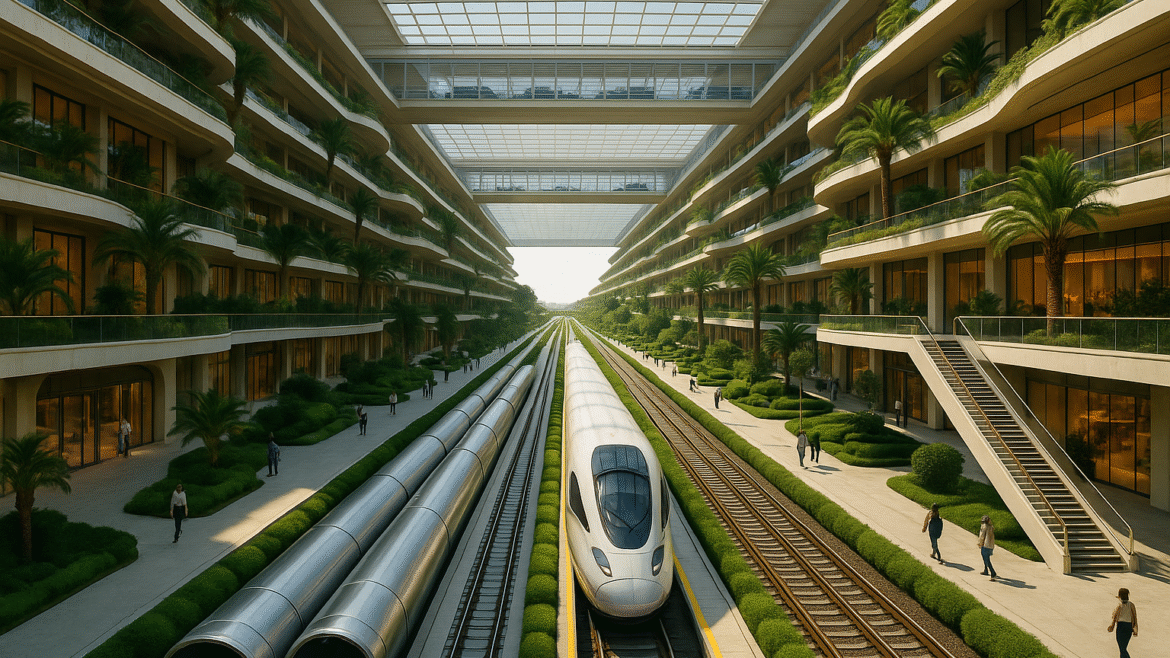
A Pan-African Integrated High Speed Train Network is Flagship Project No. 1 on the African Unions Agenda 2063. African nations trade more with countries outside Africa than among themselves. The high cost of transporting goods across the continent plays a big role in that problem. Africa City will help finance the construction of the railway for its own use and provide the high passenger density required to make high-speed rail profitable. .
Africa City will Unite the Africa Continent into a Single Market
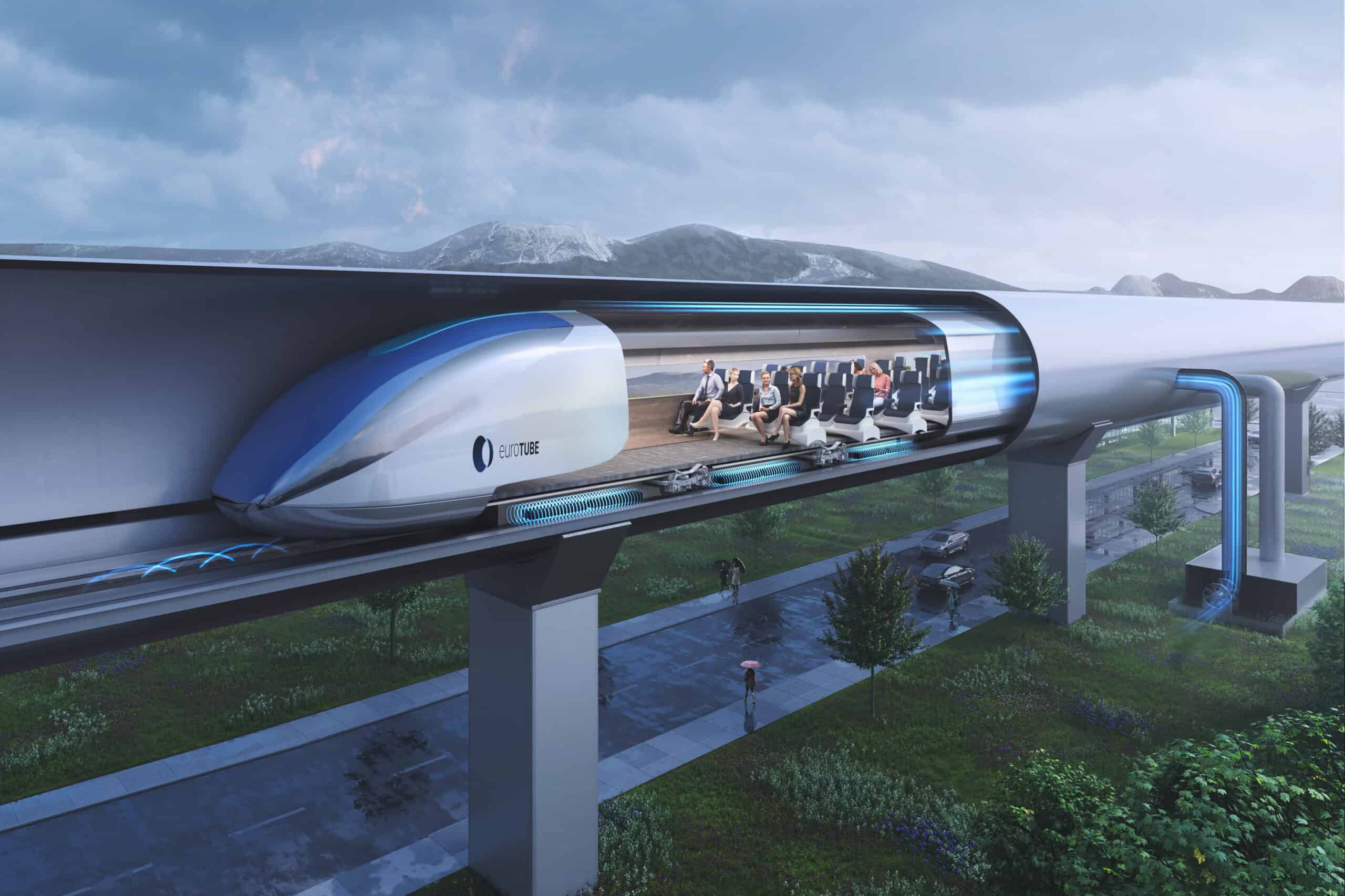
The African Integrated High-Speed Train Network is a flagship project of the African Union’s Agenda 2063.
The goal is to connect all of Africa’s political and commercial capitals by high-speed rail so as to reduce the cost of transporting goods within the continent and thereby increase trade between African nations. Currently African nations trade more with nations outside Africa than among themselves.
The problem is Africa is a very large continent that is sparsely populated. Africa is geographically the size of the US, Europe and China combined. However our population is currently only equal to that of China. It will take another 25 years, by 2050 for Africa’s population to grow to become equal to that of the US, Europe and China combined.
This means that passenger and cargo density on the railway will be low, resulting in an unprofitable railway line that will fall into disrepair similar to Tanzania and Zambia’s TAZARA. For this reason most African nations won’t even be granted loans to build their sections of the railway.
The purpose of building Africa City along the railway is to maximize passenger and cargo density so as to insure its profitability. Each Africa City district finances the construction and maintenance of its section of the African Integrated High-Speed Train Network. The railway will be a tolled railway similar to a toll road.
Tanzanian has managed get loans to finance its section of the African Integrated High-Speed Train Network (a.k.a. the Pan-African Railway). In this case the toll fee for using the railway will go to the Tanzanian government to service the loan used to construct the railway.
If a neighboring country like the Democratic Republic of the Congo failed to get a loan to finance its section of the railway connecting Eastern DRC to its Western coast, the Africa City districts would finance the railway and the toll fees would go to each respective district. Your train ticket payment will be automatically divided among each district that you crossed.
In this way Africa will be able to achieve its long held dream of connecting Africa’s political and commercial capitals by high-speed rail. I dare to say population density along the railway will be so high that even adding hyperloop transportation, using the same toll model, will be profitable.
Hyperloop is kind of like a train that can move as fast as an airplane inside a tube where the air in the tube is removed to reduce air friction and the train is suspended in the air slightly using electronic magnets to reduce ground friction. Even at regular high-speed train speeds, hyperloop has the advantage of using less energy and since the train cars are not physically attached to each other, the whole train does not have to stop at a train station. Only the cars that are dropping off or picking up passengers at that station. This unique feature enables hyperloop pods or capsules to operate more like a convoy of busses, that means you can have a lot more stops along the way like a city bus.
Africa City will cross African borders but within the walls of the city, those national borders won’t be recognized. Within Africa City, the African continent will be a single market with complete freedom of movement for people, goods and services.
Aaron Kalikawe