

Revolutionary Economic Policy
Transforming Tanzania’s Economy Through Technology Stock Ownership
Technology Stock Distribution
Land along the SGR railway line will be exchanged for technology company stocks, distributed equally to every Tanzanian citizen
Connecting Economic Growth to Wage Growth

The World Bank recommends that African governments achieve UN Sustainable Development Goal No. 1 (No Poverty) by increasing economic growth until poverty rates fall below 3%. However, this approach assumes that economic growth directly causes poverty reduction, when in reality, the relationship is merely correlational.
Economic growth can occur while wages remain stagnant—a phenomenon currently experienced in the United States. Despite years of economic expansion, American wages have stagnated due to manufacturing jobs being offshored to lower-wage countries. American workers lost manufacturing positions and often accepted lower-paying alternatives, while companies increased profits through reduced labor costs and expanded global markets.
This pattern repeats when automation displaces workers. Company profits grow while displaced workers often find lower-paying alternatives. Increased productivity may benefit remaining workers with higher wages, but this creates rising income inequality. The same phenomenon will likely occur with advancing AI technology, where white-collar workers face displacement similar to factory workers.
Our Strategic Response
Learning from these economic lessons, our administration will create a direct link between economic growth and income growth by making every Tanzanian citizen a financial shareholder in the economy. Rather than relying on indirect benefits from growth, citizens will directly participate in economic success.
The Africa City Initiative
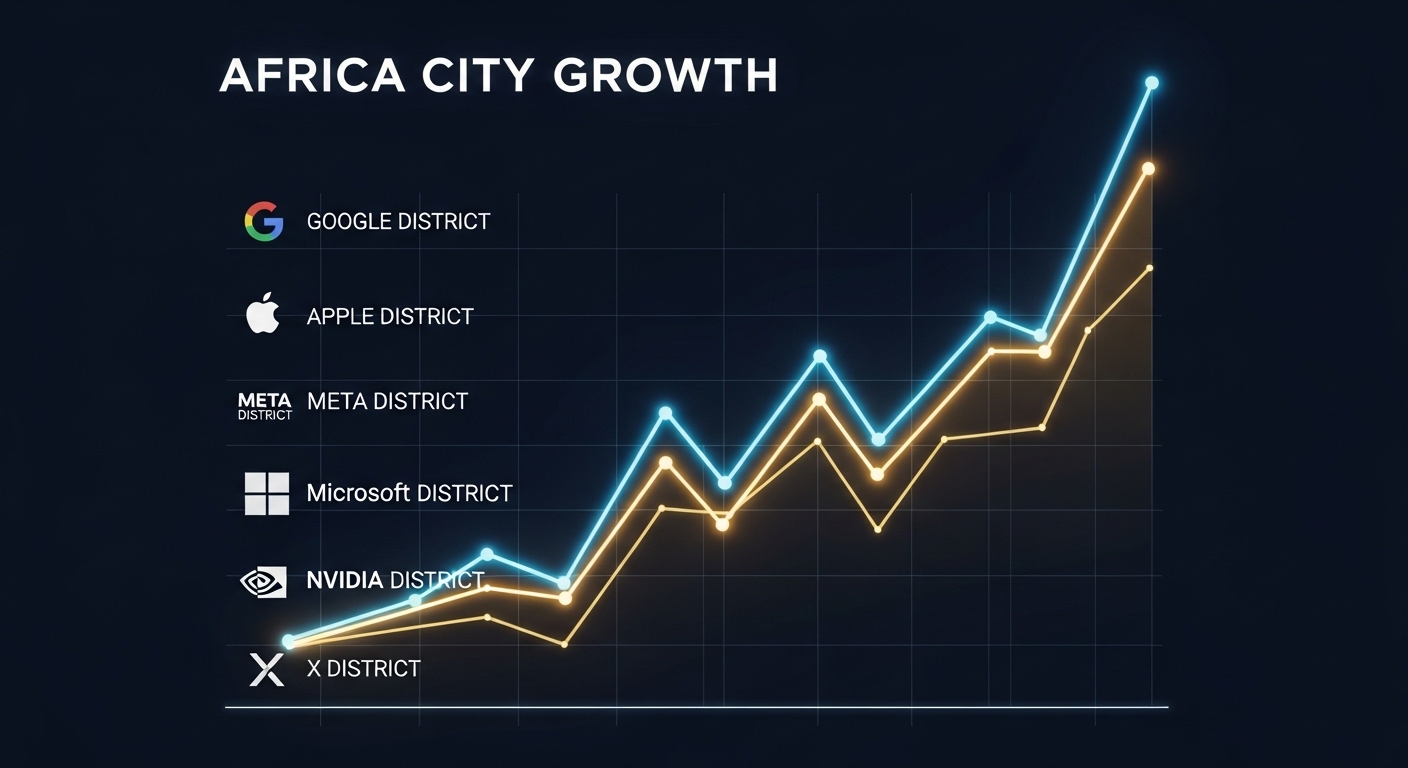
Implementing nationwide economic shareholding requires creating a new economy from the ground up. Africa City will serve as a Special Administrative Region with Hong Kong-level autonomy—a linear city stretching 1 kilometer wide and 512 kilometers long, connecting Dar es Salaam (Tanzania’s commercial capital) to Dodoma (Tanzania’s political capital) along the SGR railway line.
Africa City districts will be privately owned and governed by the world’s largest technology corporations. These companies will purchase land and governance rights using their corporate stock, which will be distributed equally among all Tanzanian citizens—children, working-age adults, and elderly alike.
Why Technology Companies? Technology firms offer exceptional growth potential in stock valuations and dominate global market capitalizations. Citizens will benefit not only from profits generated within Africa City but also from these companies’ global operations.
Revolutionary Tax Policy: Corporate Shares Instead of Tax Revenue

Corporate tax avoidance represents a systemic challenge that requires innovative solutions. Rather than competing in a “race to the bottom” with tax rates, we propose a fundamental shift in how governments generate revenue and distribute wealth.
Small nations with limited populations require less tax revenue than large nations, creating natural competitive advantages. Instead of criticizing this reality, we should innovate our approach to align government interests with corporate interests.
- Demand Corporate Shares as Payment: Instead of requesting taxes for natural resources, we will demand shares in companies investing in Tanzania’s resources. Tax avoidance strategies benefit shareholders—by becoming shareholders ourselves, we align interests and eliminate avoidance incentives.
- Capture Global Value Creation: When we sell land to Apple in Tanzania and receive payment in Apple shares, we benefit from global iPhone sales immediately, not just from local operations. This multiplies our economic participation beyond Tanzania’s borders.
- Long-term Economic Resilience: Even if Tanzania’s natural resources are depleted, we continue benefiting from global operations. As companies like Shell transition to electric vehicle charging, our shareholding ensures continued benefits from their evolving business models.
- Full Value Chain Participation: Vertically integrated companies like Shell operate from resource extraction to retail sales. Share ownership captures value from the entire chain, not just the extraction phase that traditional taxation covers.
Democratic Wealth Distribution
Corporate shares received as payment will be distributed equally among all Tanzanian citizens, preventing government officials from misappropriating national wealth. This ensures that natural resource benefits flow directly to the people before reaching government hands.
A non-governmental institution will manage these shares to purchase fractional real estate investments for citizens. Monthly rental income will fund a Universal Basic Income program with no upper limit, creating sustainable wealth distribution.
The people owning the means of production represents a socialist concept. However, our approach goes beyond traditional socialism—which typically meant government ownership—to achieve true citizen ownership through capitalism’s purest form. We will accomplish socialist objectives using free market competition, where even governance operates through private companies owned by multinational corporations. Tanzanians will earn capital gains through technology stock ownership in these private governments.
Addressing Laissez-Faire Concerns
Critics of free-market capitalism often raise three primary concerns, which our model addresses systematically:
- Income Inequality: Our poverty eradication strategy will create superior income equality compared to current OECD welfare systems through direct stock ownership and UBI distribution.
- Environmental Protection: Private governments will enforce OECD environmental regulations. Companies can choose which country’s standards to follow and may propose alternative regulations for approval by other businesses.
- Worker Protection: OECD labor regulations will be enforced by private governments, ensuring worker rights while maintaining competitive flexibility.
Military and foreign affairs will remain under national government control, while all other governance functions operate through competitive private administration. This represents the most comprehensive implementation of free-market principles in modern governance.
A New Economic Model for Tanzania
Our revolutionary approach combines the best of capitalism and socialism, ensuring every Tanzanian citizen becomes a direct beneficiary of economic growth through technology stock ownership and innovative governance structures.
