

Economic Growth Through Economies of Scale
Building Tanzania’s Manufacturing Future with the Mpakani SEZ Strategy
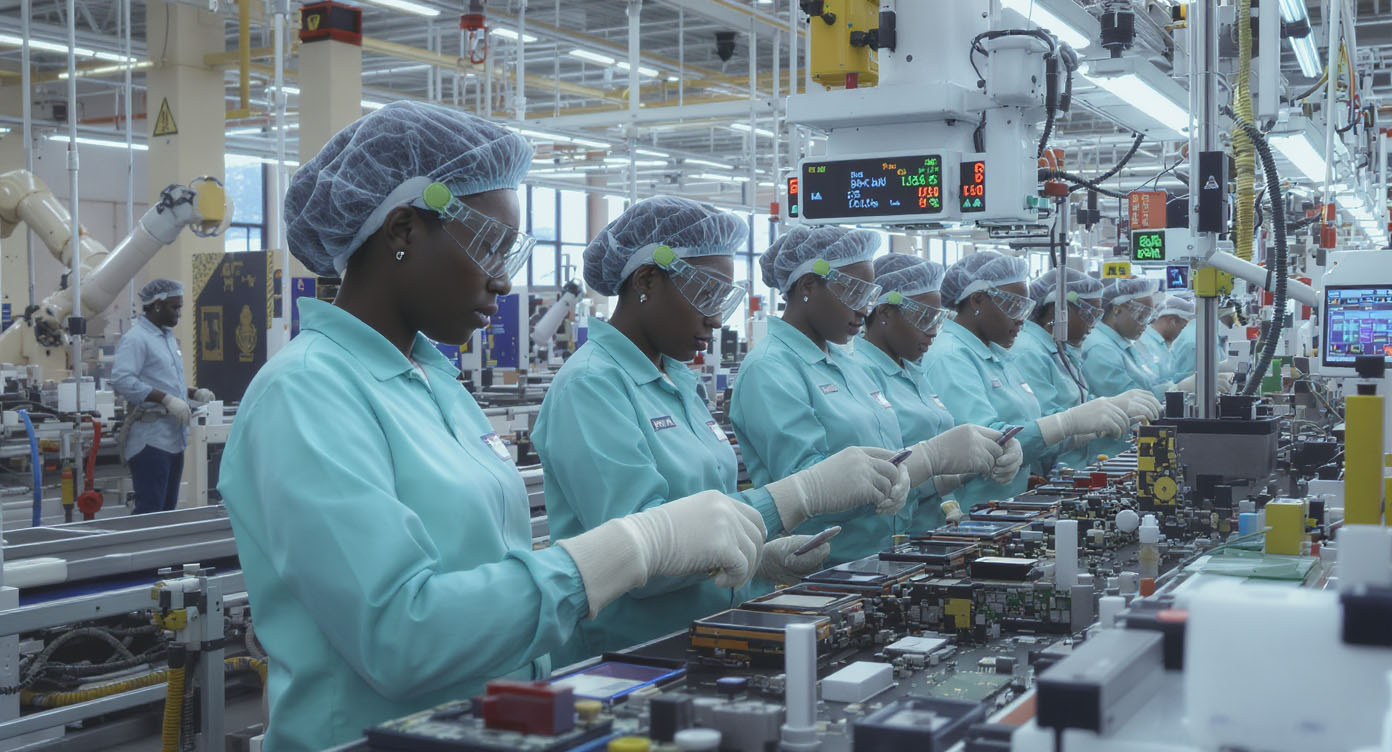
After addressing technical agglomeration challenges, the next major constraint to local manufacturing development is achieving viable economies of scale. When policymakers advocate for local production of specific products, they must think strategically beyond manufacturing solely for domestic consumption. For a truly successful manufacturing industry, production facilities must target both domestic and international markets. Manufacturing exclusively for Tanzania’s population of 66 million people is financially unfeasible for most products—particularly when 45% of that population lives below the international poverty line.
The Mpakani SEZ Solution: Tanzania’s Path to Manufacturing Excellence
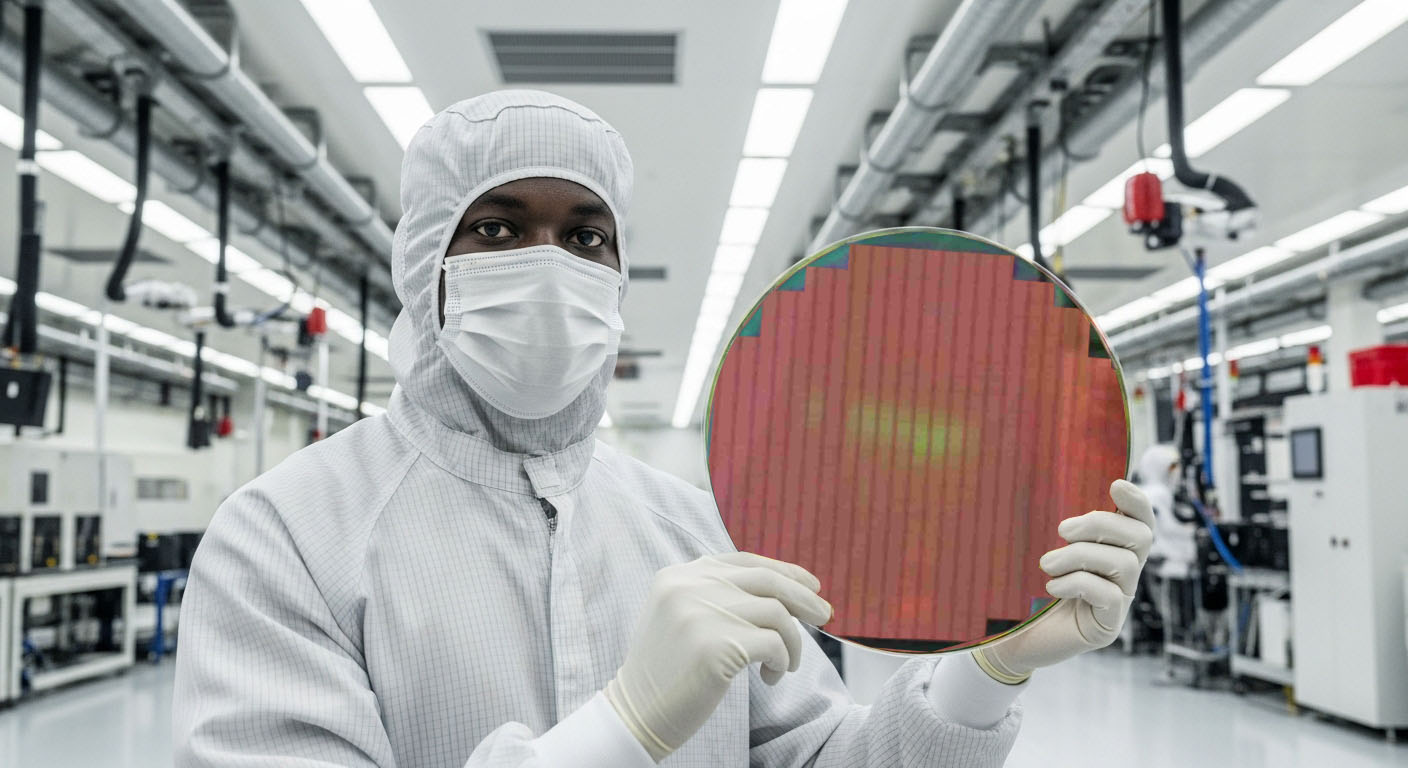
My comprehensive solution centers on establishing the Mpakani Special Economic Zone (SEZ) adjacent to Africa City. This strategic pairing represents Tanzania’s version of the proven Hong Kong-Shenzhen model that transformed China’s economy. Africa City will serve as Tanzania’s equivalent of Hong Kong—a financial and administrative hub—while Mpakani SEZ will function as our Shenzhen, focusing on large-scale manufacturing and export production.
Mpakani SEZ will prioritize Tanzanian workers in all hiring decisions. However, to achieve the economies of scale necessary for global competitiveness, we must acknowledge that domestic labor alone will be insufficient. China’s manufacturing sector employs 128 million workers—a scale that demonstrates the workforce requirements for global manufacturing leadership.
Once Tanzanian job applicants have been exhausted in Mpakani SEZ, companies will be granted FREE ACCESS to IMPORT & EMPLOY from a GLOBAL LABOR POOL of talent.
Critical Strategic Insight: Most countries attempting to replicate China’s manufacturing success have made a fundamental error: they copied Shenzhen’s Special Economic Zone model while neglecting Hong Kong’s Special Administrative Region framework. Hong Kong was instrumental to China’s manufacturing success, serving as a crucial source of Foreign Direct Investment and international business connections.
Historical Context: Learning from China’s Economic Transformation
In 1980, China was recovering from the catastrophic policies of the Great Leap Forward. Between 1960–1962, an estimated 30 million people died of starvation in China—the largest single famine in recorded human history. Following Mao Zedong’s death in 1976, Deng Xiaoping assumed leadership in 1978 and guided China through comprehensive reforms that transformed its economy into a socialist market economy. He is widely recognized as the “Architect of Modern China.”
In 1980, Deng Xiaoping established the Shenzhen Special Economic Zone—the first of four SEZs created that year. Shenzhen’s success was fundamentally tied to its strategic location directly adjacent to Hong Kong. During this period, Hong Kong remained a British colony (until the 1997 handover to the PRC), which meant it had avoided the economic devastation that affected mainland China during the Great Leap Forward.
The establishment of Shenzhen Special Economic Zone at the Hong Kong border created a dynamic “poor city meets rich city” scenario, fostering a symbiotic economic relationship. Hong Kong’s wealth made manufacturing there relatively expensive, prompting Hong Kong-based companies to relocate production to Shenzhen, where lower labor costs were among many investment incentives. Hong Kong simultaneously served as the gateway for foreign companies shifting manufacturing operations to China.
Special Economic Zones were authorized to develop independent legislation. The Shenzhen Special Economic Zone was the most active SEZ for legislative experimentation from 1979-1990, and its legislation significantly influenced national economic law regarding foreign trade and investment.
By 2018, after 38 years of development, Shenzhen’s nominal GDP surpassed Hong Kong’s. While Hong Kong is geographically slightly larger than Shenzhen city, Shenzhen supports a population 10 million larger than Hong Kong’s.
Tanzania’s Strategic Adaptation: The Africa City-Mpakani Model
Having analyzed China’s successful SAR + adjacent SEZ formula, I have developed a comprehensive strategy to recreate both components in Tanzania. Africa City will become Tanzania’s Hong Kong equivalent, while Mpakani Special Economic Zone will serve as our Shenzhen counterpart.
Strategic Innovation: Linear Twin Cities
The key difference from China’s model is that Africa City and Mpakani will not be traditional port cities, but rather narrow linear twin cities strategically designed to serve massive customer bases through their proximity to the Standard Gauge Railway (SGR) line. These twin cities will redistribute wealth from Africa’s coastal regions to the continent’s rural interior areas as they extend across the continent, connecting Africa’s major political and commercial capitals—fulfilling a long-held dream of the African Union and representing the 1st Flagship Project of Agenda 2063.
Long-term Vision: Africa as the World’s Manufacturing Hub
The Poverty Eradication Strategy is designed to stimulate domestic consumption of African-manufactured products rather than relying heavily on global exports. However, as the rest of the world ages while Africans become the world’s largest working-age population by 2050, Africa will inherit the mantle from China and emerge as the world’s leading manufacturing base.
2050 Vision
Africa becomes the world’s largest working-age population and global manufacturing leader
The Future of African Manufacturing
This strategic vision positions Tanzania not merely as a participant in global manufacturing, but as a continental leader in the economic transformation that will define Africa’s role in the 21st century global economy.

